
The film “Vision Portraits” which is directed by Rodney Evans, explores the lives of four individuals that are affected by vision impairment, either by being fully blind or close to it. The film focuses on how people who face disabilities like blindness, may have a more challenging time navigating life. However, they do not want to be seen as disadvantaged, or weak because they can still do so much. It is a short film which lets you see life through a whole new vision and shows you a different way in which to look world.
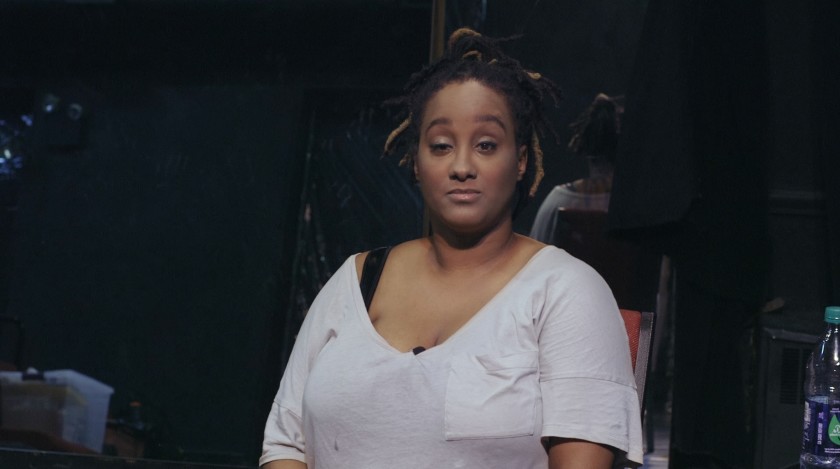
The film covers all sorts of people from different backgrounds and experiences. Evans is the director of the film who is of colour and has barley any vision left. But continues to work and direct films because it is what he loves to do so why should this stop him? Then there is John Dugdale who is a photographer who is gay and after having an HIV related stroke has lost most of his vision. He talks about what it’s like to be a blind photographer and takes the viewers through what it is like to imagine things only with their mind and not their vision. Kayla Hamilton is a coloured woman who is a dancer, she has no vision in one of her eyes, therefore dances with her eyes closed, or uses a blind fold to help her one eye see better. She often encourages her audience to do the same by wearing a blindfold to watch her dance, to experience what she experiences. Lastly, there is a writer Ryan Knighton who is a professor at a university, who lost most of his vision when he was a teenager. He looks at blindness more as a point of view more than a disadvantage.

The film analysis how the lives of these disabled people might be different from those of able-bodied: those who are healthy and not physically disabled. The representation of characters is broad, having coloured and white people, as well as gay, men and women of all different ages and ranges of vision. The film shows us all kinds of different oppressions one might face in their life, or how they all might be vision impaired, but have other factors that may hold them back in life. It shows us that even though these people may have been categorized as disabled they are still capable of doing so much. At times they felt like they had to fight to not been seen as disabled because of the stigma that is around it. In Garland-Thomas’s reading “Integrating Disability, Transforming Feminist Theory”, she talks about disability and how it might be looked at as a negative, “disability is a broad term within which cluster ideological categories varied as sick, deformed, abnormal, crazy, ugly, old, etc. All of which disadvantage people by devaluing their bodies that do not conform to the cultural standards” (Garland-Thomas 260, 2013). The film itself focuses a lot on how people with disabilities do not want to be seen as disabled or pitied. They make a big emphasis on how they are still capable of doing many things a person with vision might, they just have a different way of doing so.

Throughout the short film it displays how disabled people have to fight the stigma that their disability does not define who they are. This is shown through Dugdale the photographer, who had a conversation with his mother shortly after he lost his vision and how she mentioned that she was so proud of his career as a photographer. She assumed that once he lost his vision, he was no longer going to be a photographer. However, he explained that just because he cannot see does not mean he cannot still achieve and produce photos like he did before. Dugdale with the help from others continues to be a photographer, he does so by asking others to close their eyes and picture what he describes and asks them to frame it for him so later he can take the photo. They are still his creative photos and he is still the photographer; he just has a little help getting the right framing and focus. Another aspect the film shows is how he is also gay while blind so he would be more oppressed than other white men who might just be blind.
Intersectionality is shown throughout the entire film by not just focusing on vision impairment but other aspects of life where they may also be disadvantaged or oppressed. An example of this is with Hamilton the dancer who is a woman of colour who is blind in one eye. Not only just she faces challenges as a person with a disability but as well as racism and sexism. She talks about how she may not always be seen the same way as a white woman may be or be treated the same way. She shows us how she continues to live her life without letting others have a say or tell her what to do, letting now one hold her back. The film itself is very diverse, focusing on how different people may be affected by the same thing, however, because of their position in life, like their race or sex they have all have different experiences. Dugdale explains that sometimes he feels more pressure because not only is he blind but is also openly gay and feels more pressured at times than others, because he is oh a minority class.
Overall, the film does a great job of showing how certain interlocking forms of oppression will not stop people from holding them back. As explained in “Age, Race, Class, and Sex: Women Redefining Differences” by Lorde, Audre Geraldine she explains how instead of our differences bringing us together, they tend to separate us “ we have no patterns for relating our across our human differences as equals, as a result, those differences have been misnamed and misused in the service of separation and confusion” (Lorde 115, 1984). That society as a whole tries to separate us, instead of bringing us together and “Vision Portraits” does a great job to show how we can break these barriers and do the unexpected. In the end, the film analyzes all aspects a visually impaired person may experience from all walks of life. It teaches us that no matter how hard something may be, it is never out of reach, you just need to take a different perspective on it.
Word count: 1076
References
Garland-Thomson (2013). Integrating Disability, Transforming Feminist Theory. The Disability Studies Reader. ereserves.library.queensu.ca/ares/ares.dll?Action=10&Type=10&Value=119911. Accessed 13th Feb. 2020.
Lorde, Audre Geraldine. Age, Race, Class, and Sex: Women Redefining Difference. Black Thought and Culture.onq.queensu.ca/d2l/le/content/377345/viewContent/2190381/View. Accessed 12th Feb. 2020.
 Vision Portraits Blog